
Why Progress Slows for Junior Golfers — And What Elite Development Actually Looks Like
If you spend enough time around junior golf, you'll notice something interesting. Most players improve quickly at first. But over time, progress often begins to slow. Scores start to level off. Consistency becomes harder to maintain. Confidence can fluctuate. And for many families, this is where the questions begin.
The reality is this: progress doesn't slow because of a lack of talent. It slows because of how a player is being developed.
The Problem: Junior Golf Development Is Often Incomplete
Traditional junior golf development tends to lean heavily in one direction — technical instruction, tournament play, or simply playing more golf. But long-term, high-level development doesn't work like that. True progress comes from a combination of physical development, technical skill, and mental performance. When one of those areas is missing, progress doesn't stop completely, but it does begin to slow.
The 3 Reasons Junior Golf Progress Slows
1. Too Much Focus on Outcome, Not Enough on Process
Many junior golfers are taught — directly or indirectly — to chase results: scores, rankings, tournament finishes. But long-term improvement is built differently. Elite junior golfers focus on skill development, movement quality, and practice habits. They understand that performance is a byproduct of preparation.
When players become overly focused on results, they tend to avoid challenges, struggle with failure, and become inconsistent under pressure. Over time, that mindset quietly limits how much they're able to grow.
2. Development Isn't Truly Individualized
No two players move the same. No two players learn the same. Yet many junior programs still rely on the same drills, the same swing models, and the same coaching approach for everyone. At higher levels, that creates real limitations. Effective development requires understanding how a specific player moves, identifying their natural tendencies, and building a plan around the individual. Without that, players often end up working against their own movement patterns, developing compensations, and struggling to repeat their motion consistently.
3. The Mental Side Is Underdeveloped
One of the most overlooked aspects of junior golf development is the mental side of the game — and not just in competition. Mental skills shape how a player approaches challenges, processes failure, and continues to grow. They influence consistency, confidence, decision-making, and the ability to perform under pressure. When the mental side isn't developed alongside technique and skill, progress becomes less stable. It's often the last thing addressed, and the first reason a promising player stops improving.
What Elite Junior Golf Development Actually Looks Like
At higher levels, development isn't separated into parts — it's integrated. It's not just about building a golf swing. It's about developing the complete junior golfer. That starts with movement and biomechanics. Understanding how the body actually functions allows players to move efficiently, consistently, and safely. At MMG Performance, we use 3D motion capture technology to go beyond what the naked eye can see — giving coaches and players objective data on how they actually move, not just how it looks. From there, skill development is designed to transfer directly to performance on the course — not just to look good on the range. Mental training helps players think clearly, adapt, and perform when it counts. And long-term planning builds a structured path that supports real improvement over years, not just short-term gains.
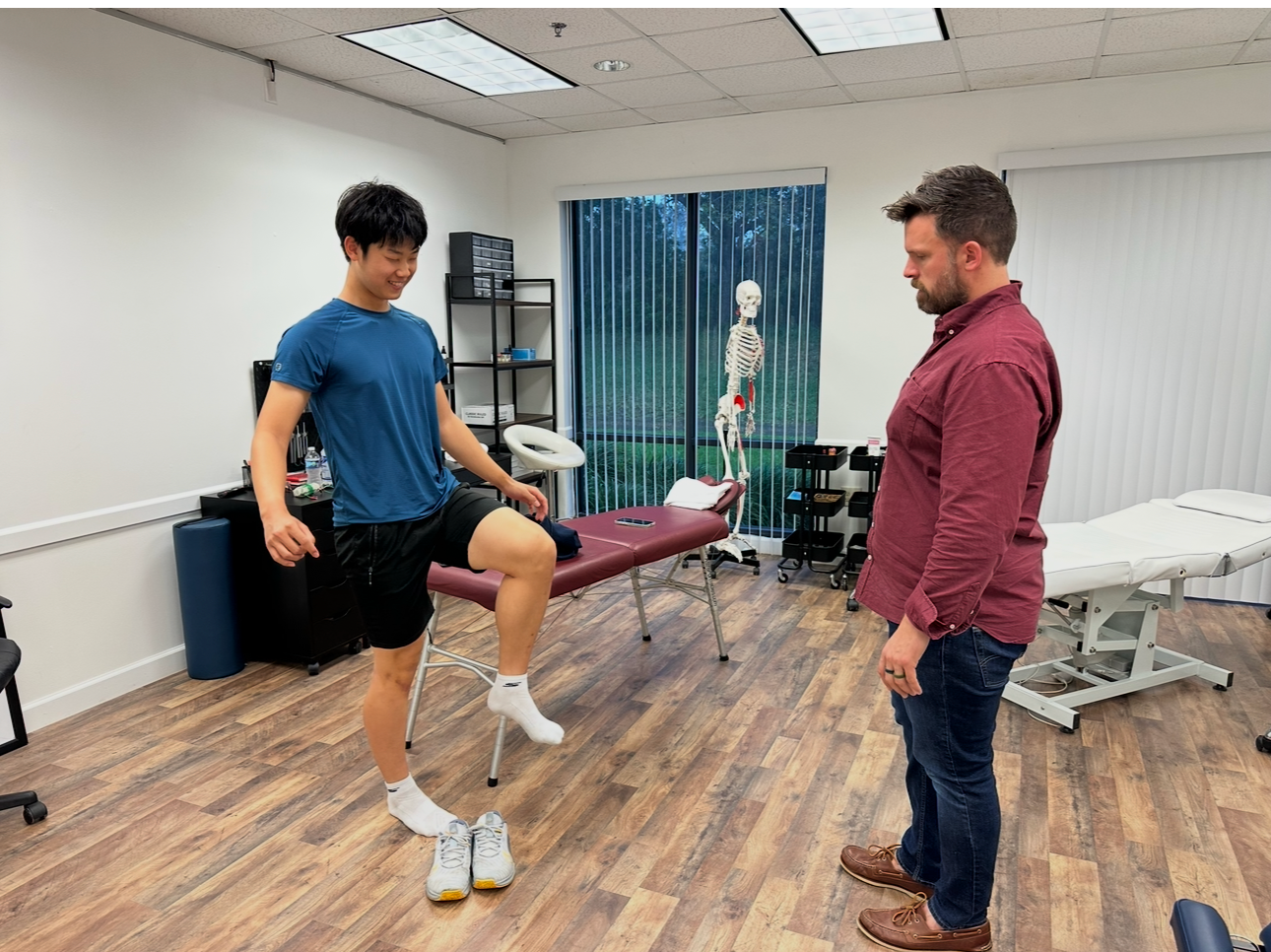
MMG College Prep Student with Dr. Brendan McLaughlin
For players with college aspirations, that long-term structure is especially critical. Our College Prep Full-Time Program is built specifically around this kind of intentional, multi-year development pathway — because getting recruited isn't just about playing well today. It's about being built to perform when it matters most.
This is what separates players who improve early from players who continue to improve over time.
The Role of the Training Environment
An often overlooked factor in junior golf development is the environment a player is in. The people they train alongside, the standards they're surrounded by, the coaching they receive consistently — all of it matters. A strong training environment reinforces the right habits, encourages growth over short-term results, and builds the kind of accountability and confidence that carries onto the course. Development isn't just what happens in a lesson. It's what happens every day around the player.
Final Thought
Every junior golfer has potential. But potential develops best within the right structure — a clear plan, individualized coaching, and an environment that challenges and supports the player at the same time.
Most importantly, it requires an approach that develops the player as a whole. Not just their swing.